Fireworks Cookbook Chemicals
  • Home
  • Shop
  • Contact
  • Recipes
  • My Account
  • Home
  • Shop
  • Contact
  • Recipes
  • My Account
$0.00 0 Cart
Fireworks Cookbook

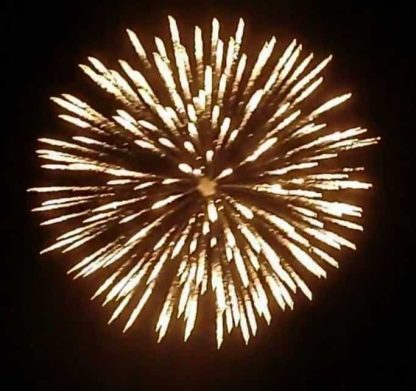
D1 Gold Glitter was designed by Jack Drewes and Tom Rebenklau.  This kit makes 11 pounds of stars.  See formula HERE

6lb Potassium Nitrate Milled
2lb Sulfur
3lb Charcoal Mixed Hardwood Airfloat
1lb Aluminum Atomized Spherical -325 mesh
1lb Sodium Bicarbonate
1lb Dextrin

D1 Glitter Star Kit

Potassium Nitrate Technical Grade Milled × 6

Introduction

Potassium nitrate milled, also known as KNO3, is a highly versatile oxidizer extensively used in fireworks and pyrotechnics. It is a white powder or long needle-like crystals, manufactured with high purity for various applications.

$4.00 each Per Pound / 2-Pound Bags

Charcoal Mixed Hardwood Airfloat (KIT) × 3

Introduction

Charcoal Mixed Hardwood Airfloat is a finely ground charcoal derived from a blend of hardwoods, prized for its use in pyrotechnics due to its unique properties.

Temporarily unavailable

Sulfur × 2

Introduction

Sulfur is a vital component in pyrotechnics, serving multiple crucial functions. It acts as a fuel, significantly reducing the ignition temperature of mixtures. Additionally, sulfur enhances the burning rate of compositions, ensuring vibrant and long-lasting displays. However, it's important to note that sulfur can increase the friction or shock sensitivity of mixtures, particularly those containing chlorate or perchlorate oxidizers.

$3.00 each Per Pound

In stock

Aluminum Atomized Spherical

Introduction

Aluminum Atomized Spherical powder is a specialized form of aluminum powder used in pyrotechnics to create unique effects in fireworks displays. Unlike traditional flake powders, atomized spherical particles are more difficult to ignite, making them ideal for specific applications where controlled ignition is desired.

-325 mesh

Sodium Bicarbonate

Introduction

Sodium bicarbonate, commonly known as baking soda, is a versatile compound used in fireworks compositions. It is a white crystalline solid but often appears as a fine powder, making it suitable for various pyrotechnic applications.

$2.00 Per Pound

In stock

Per Pound

In stock

This product is currently unavailable.
SKU FCB-KIT-D1 Category Kits
  • Description
  • Additional information
  • Reviews (0)

Description

Preparation

The composition designer suggests dampening with 6% plain water with 1 part of boric acid dissolved in it when pressing comets or pumping stars. It need not be ball milled if your components are already sufficiently fine, just screen together, moisten and granulate through a coarse sieve ready for pressing/pumping.

Comments

It burns fairly fast with a brilliant tail of long-delayed gold flashes. It is quite drossy, not really suitable for gerbs or rockets, it will slag their nozzles very rapidly.

It is moderately hygroscopic and should be protected from dew and condensing/damp conditions in general, but it is far from unusable and quite a bit better than Winokur #24 in this regard. It should be dried well before use, and it takes some time to dry properly. A damp D1 Glitter star will be hard to light, produce almost no glitter and often burn to the ground. I strongly suspect that many of the issues reported using D1 Glitter by other pyrotechnists is a lack of proper drying.

The stars can be carefully forced dry in an ~85C oven if all else fails. I’ve never experienced a Nitrate/Al alkaline reaction run away doing this, even at higher temperatures and with no special pains taken to protect the Aluminium.

I generally use a 25% solution of alcohol and somewhat less than 6% solvent, probably half that amount typically. Larger amounts are needed for cutting. It need only just stick together if you are pumping. Forcing through a sieve several times will help distribute small quantities of moisture evenly.

I also like to ball mill the mixture sans the metal to achieve homogeneity. However, note that milling for too long (more than an hour or so) will reduce the tail length and glitter delay significantly.

Some like to keep 4-5 parts of the charcoal fairly coarse, 60-100 mesh which adds body to the non-glittering part of the tail.

The Aluminium is somewhat critical to the effect. Fine flakes are generally wasted on D1, however some bright flake can help with fallout problems or stubborn failure to glitter. Atomised Aluminium of tightly controlled and overall quite fine particle sizes is ideal. There should not be too much coarse material.

I recommend meal priming to ensure ignition and proper engulfing so all stars in a device will burn for nearly the same time and produce equally dense effects.

Additional information

Weight 14 lbs
Dimensions 1 × 1 × 1 in

Reviews

There are no reviews yet.

Be the first to review “D1 Glitter Star Kit” Cancel reply

Your email address will not be published. Required fields are marked *

About
  • 805 GA HWY 247S
    Kathleen, GA 31047
  • (229) 400-9078
  • [email protected]
Top Selling Products
  • Potassium-Perchlorate powder in a scoop on a brown surface.

    Potassium Perchlorate

    Add to cart
  • A scoop of gray powder on a brown background.

    Aluminum German Dark Pyro (5413H Super)

    Add to cart
  • A scoop of ptasium nitrate white powder on a brown surface.

    Potassium Nitrate Technical Grade Milled

    Add to cart
Information
  • About Us
  • Contact
  • Terms & Conditions
  • Privacy Policy
  • Shipping & Delivery
  • ID Upload
  • About Us
  • Contact
  • Terms & Conditions
  • Privacy Policy
  • Shipping & Delivery
  • ID Upload
Follow Us
  • Facebook
  • X (Twitter)
  • Instagram
  • TikTok
  • YouTube

© 2025 Fireworks Cookbook. All Rights Reserved.